Four Ways To Make Your Turn-Based Game More Interesting (Or Ruin It)
The dose makes the poison.

Some times I envy designers who make action games.
Suppose you want to make your action game harder. Sure, you can take the numbers-go-up route. More health, more damage. But you can also make the target smaller. Or faster. Or move in an unpredictable way. Or take cover. So many levers to pull.
But I write turn-based RPGs. In these games, you and your opponent control blobs of numbers. I throw my numbers at your numbers, and you throw your numbers back at me. Eventually one of us runs out of numbers and loses.
Since it’s all math with no reflexes, there are fewer levers I can pull to make fights harder or more suspenseful.
But there are a few reliable ways to make your turn-based game more interesting. I use all of these in varying amounts in every game, and I have made pretty much every possible mistake several times.
(I use all of them in our newest RPG, Avernum 4: Greed and Glory, which is doing really well for us.)
The key is to do these things the right amount. The dose makes the poison. Some helps a lot, but lean too much into one, and your game will be worse. Where is the balance? Well, that’s where the art is, isn’t it?
I. Resistances
Suppose your RPG has three sorts of magic damage: Fire, Cold, and Electricity. It is possible to get super strong by only focusing on Fire. It may be tempting to force this player to diversify and explore more of the system by having an area where everything resists fire.
This will really mess up anyone who only focused on fire up until this point. However you can have enemies with a smaller amount of fire resistance earlier on to signal to the player that diversification is good.
A general design principle: It is bad to introduce elements that make large sections of the design irrelevant. If you worked hard on a cool Fire skill tree and then have enemies with 100% fire resistance, you have erased 1/3 of your own design.
BUT. This argument cuts both way. If Fire is so awesome and nobody uses Cold or Lightning, you have 100% erased 2/3 of your design. Also bad.
So resistances can be really good, if they are signaled early and encourage players to explore more of the design. Just don’t rugpull someone near the ending by making their whole build useless. The dose makes the poison.
ProTip: Have resistances come in gradually and, for stubborn people who refuse to diversify, have them cap out at 50%. Requiring paying attention to resistances should be reserved for higher difficulty levels.
II. An Advantage Plus A Disadvantage
Suppose you make a really strong magic item. You might be tempted to give it disadvantages to make the player think about whether to use it or how to work around it.
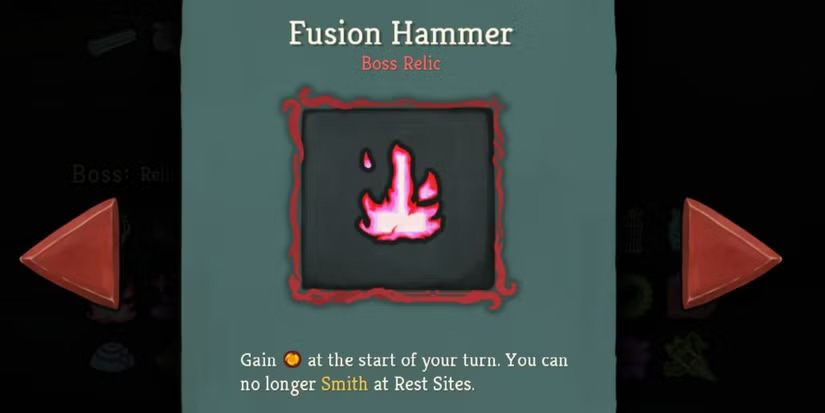
The classic card game Slay the Spire did this really well. After killing the first boss, you can pick an artifact that lets you play an extra card each turn. (VERY strong.) However, it comes with a disadvantage you must play around the entire game. You get a necessary power boost, but then you must shape your play around it from then on. But it’s worth it. Good way to do it.
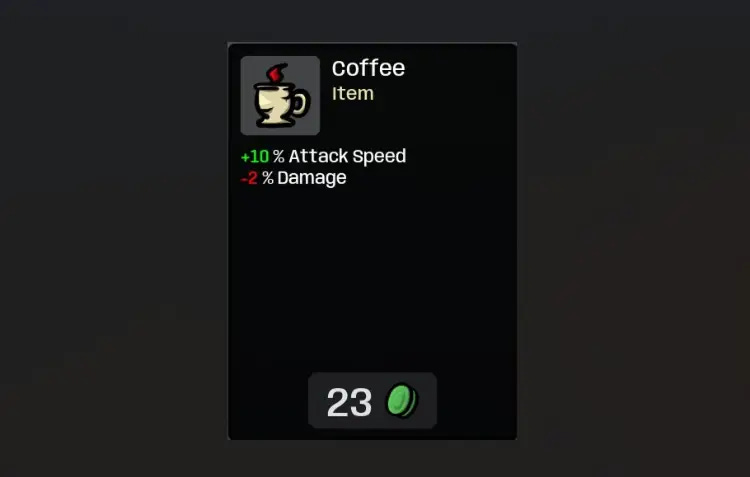
One of my favorite games, Brotato, has you buy upgrades each round. However, many of the upgrades come with a teeny tiny penalty to something else. (e.g. +10% to Attack Speed, -2% to Damage.) These penalties are so small as to be trivial. They are static. Some people are pleased by the patina of complexity they create, but I think they should be removed unless they have a real effect.
Humans are loss-averse. They tend to love the dopamine hit from upgrades and be annoyed and stressed by items that make things worse. If the upgrade is really strong and the downside makes you think about how you play and evolve your strategy, that is great.
If you aren’t doing that, maybe remove all penalties that aren’t necessary.
ProTip: If you hit the player with an explicit penalty, you should be able to finish this sentence: “This penalty is necessary or makes the game more interesting because ...”
III. Lots Of Little Bonuses
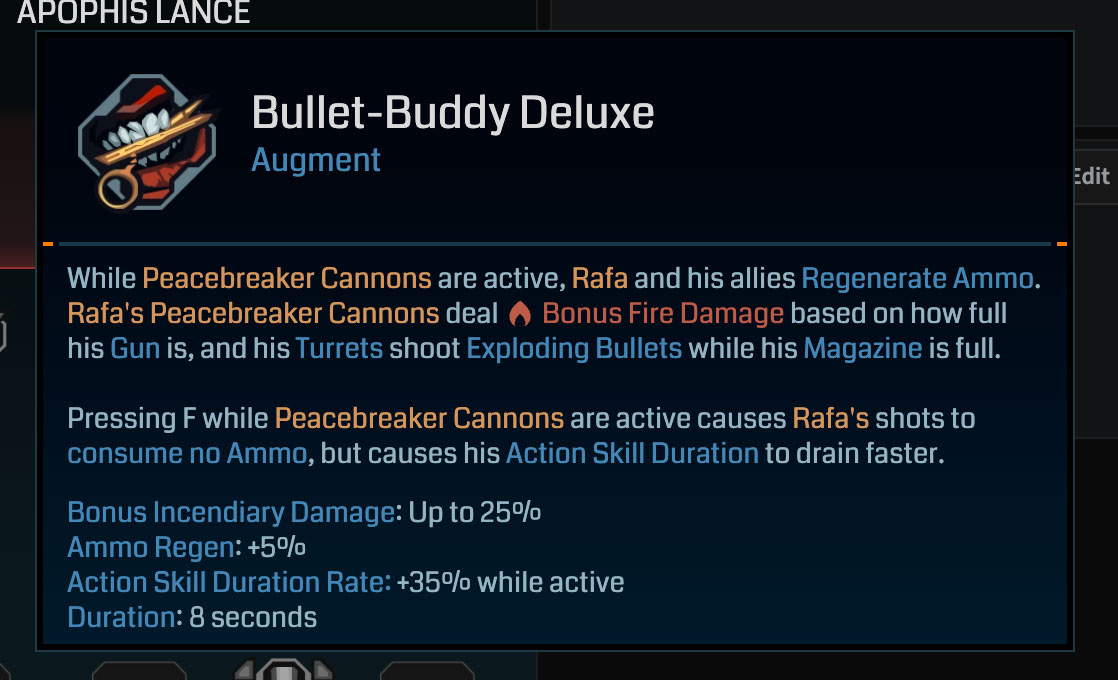
All game designers in 2025 are drug dealers, leaning hard into the dopamine business. You can dose your client more effectively with many small doses than one big one. Giving a 5% damage bonus five times is more satisfying than giving a 25% bonus once.
To get the full satisfaction effect, the bonus should be clear, and the player should be able to FEEL it. Maybe only a tiny bit, a soft feeling, but it’s there.
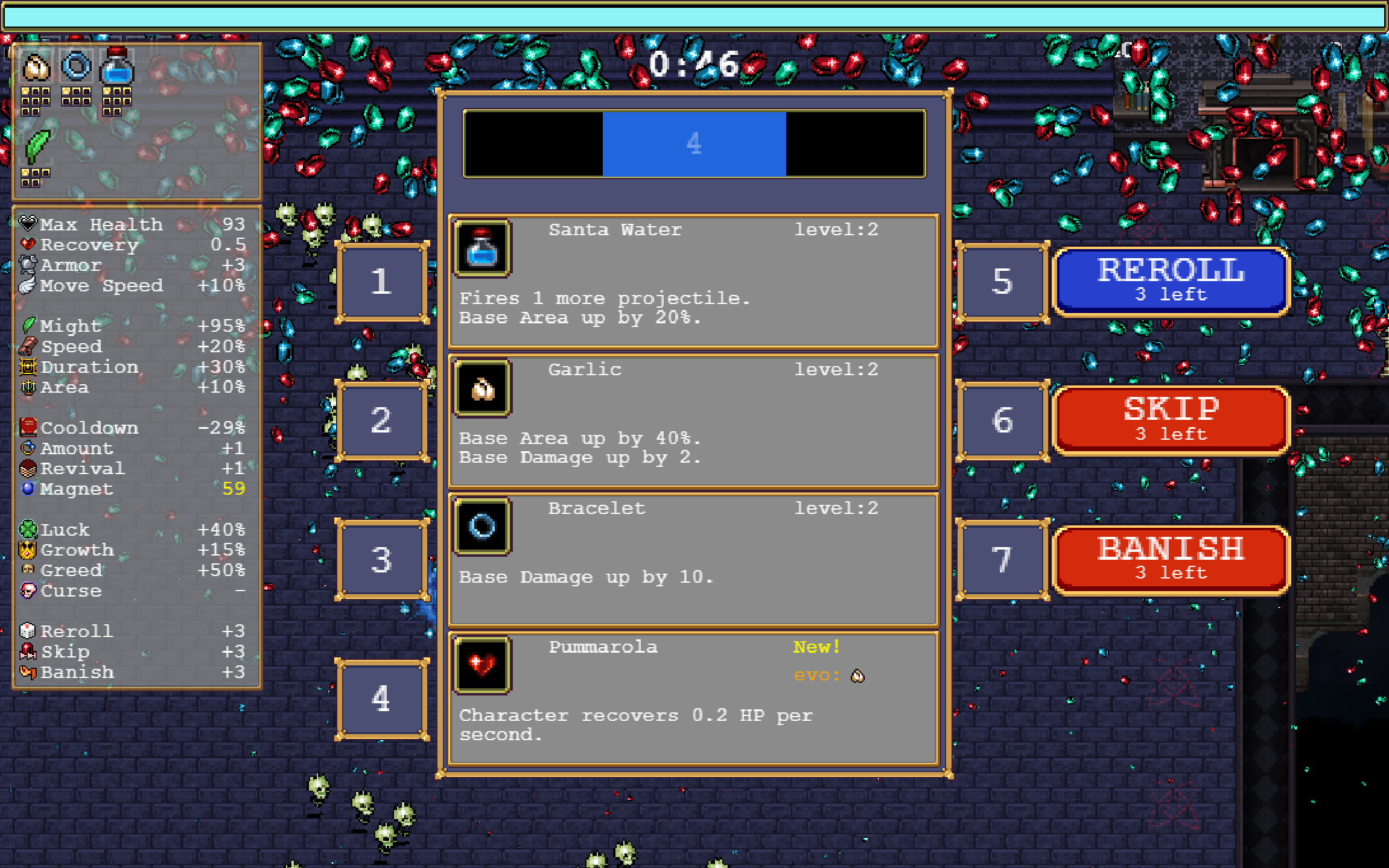
Brotato, Vampire Survivors, and Megabonk are great at this, which is why they are hits. They’re the good drugs.
However, it is very easy to slice the pastry too thin here. For example, I’m playing Borderlands 4 and seeing lots of bonuses that are both small AND conditional. 5% to damage when using one limited sort of weapon. 7% to critical hit damage when in your special form. I’m not going to do homework for a 5% damage bonus. Borderlands can get away with this by occasionally giving you a clear upgrade item and then you can just throw away a lot of trash.
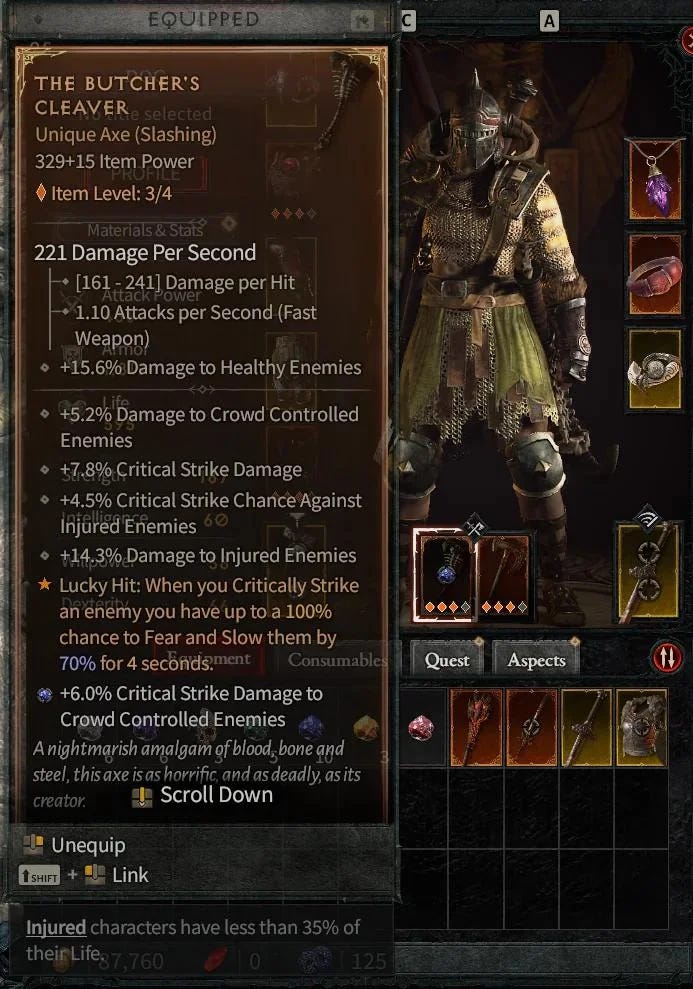
Diablo 4 had a far worse problem with this. So, so many small bonuses with conditional requirements: Bonuses but only to base attack. Or distant enemies. Or a bonus to damage while healthy. I would look at my stack of new items and not be sure if any of them were good.
If you take a small bonus and limit it further, you lose the excitement. Some people do get turned on by doing a lot of math homework for a build, but do it too much and your game ends up neglected. Like Diablo 4.
ProTip: A good bonus should be strong enough to be felt but weak enough you are hungry for more. Like a good drug.
IV. More Or Fewer Turns
The most important effect in a turn-based game is extra turns. This is why Haste and Summon effects are always the most powerful ones in an RPG. (Bonus game trivia: In original D&D, they balanced the Haste spell by making it age each character a year. LOL.)
Similarly, enemy effects that make the player lose turns are the most devastating. Everyone, everywhere, always, hates losing turns.
And yet, sometimes you have to do it. I have released games where the enemies had too many crowd control effects, and it wasn’t good. But I do like to have fights where, each round, you can’t be 100% sure which characters will get turns. It instantly adds a layer of complexity and suspense on the whole thing.
Just don’t overdo it, or it’s infuriating.
(Darkest Dungeon handles stunning effects, for both players and monsters, very well.)
ProTip: Give the player lots of ways to get bonus turns and take away enemy turns. Lots of fun. Also put the player at a risk of losing turns, but a little goes a long way.
Game Design Is A Young Field
I honestly wonder what gets taught in the Game Design classes that now pepper our colleges. The idea of game design as a discipline is well under a century old. (I personally date it to the publishing of the first edition of Monopoly, but that’s just me.) Video game design is even younger.
But whether or not it is art, it is definitely a craft. There are tricks and techniques aplenty. New tools are being discovered constantly. We have so much to learn about what tools to use, when, and how much.
Video games are art, and good art has an effect on the brains of those who experience it. Balance these factors badly, and player will wander away. Get the balance just right, and you can get rich!
Spiderweb Software creates turn-based, indie, old-school fantasy role-playing games. They are low-budget, but they’re full of good story and fun. Our new game, Avernum 4: Greed and Glory, is out! Take a look!
This newsletter is free. However, the existence of paid subscribers makes me feel guilty if I don’t update it enough, which results in more posts.
Great post! I think that advantage/disadvantage packages are cool but very difficult to balance. Fallout did a great job of this, but even it didn't get every combination right. Also, these only work if your system is very clear to the player. If you cannot tell how severe a disadvantage is, you'll probably just avoid it completely.
Also, I personally dislike lots of tiny advantages. Often, these are so small that you cannot even tell a difference during gameplay. This invalidates level ups. For example, take a look at Path of Exile. There are a lot of nodes that do super minor things (e.g., +10% spell damage). As a result, you don't notice any difference after unlocking such a node. Sure, the bonuses stack up and over time do make a difference, but the individual effect is so small that it's not rewarding.
However, some nodes in Path of Exile have a great and immediately noticeable effect. For example, the Blood Magic node completely eliminates your mana and instead powers your spells via your health. Unlocking these kinds of nodes feels great and truly rewarding. Sadly, you only get to do that every ten levels or so.
I think a system where a lot of minor nodes are eliminated and instead the remaining nodes are made more powerful would be more enjoyable.
I always want to love the final fantasy games, but they give you a seemingly deep combat system with tons of elements and status effects, and then they make the status effects worthless against every single boss (the only enemies who might be tough enough to be worth using them on).
Instead, each boss is POSSIBLY susceptible (at a very small rate of success) to a single status effect--and that one isn't obvious. The only way to find out is to cast each status effect, many times, on each boss--and there's no reason to do that because you can just kill them faster than that with damage.
A large, complex system that is utterly pointless. Octopath Traveler's combat system, however, was outstanding for a turnbased JRPG style game. Stories were pretty bland though :-/